
How Can Custom Menu Design Transform Your Restaurant's Dining Experience and Customer Satisfaction?
Understanding the Critical Role of Personalized Menu Strategy in Restaurant Success
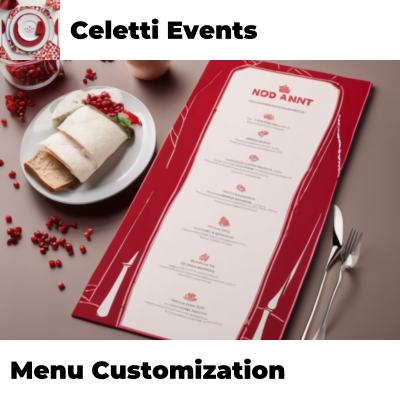
The restaurant industry operates within an increasingly competitive landscape where differentiation becomes the linchpin between thriving establishments and those that fade into obscurity. Celetti Events, an Italian catering and event services provider, recognizes that menus function as far more than mere itemization of dishes—they represent the narrative voice of an establishment, the culinary philosophy distilled into tangible offerings that customers encounter during their most memorable moments.
Menu customization transcends the traditional approach of printing standardized offerings. It encompasses a sophisticated understanding of demographic nuances, seasonal availability, dietary restrictions, and the unique storytelling opportunities that emerge when culinary expertise intersects with personalized service design. When restaurants fail to consider these dimensions, they inadvertently communicate indifference toward their clientele's preferences and constraints.
Consider the psychological dimensions at play. When diners encounter a menu specifically curated for their occasion—whether an intimate anniversary celebration, a corporate networking function, or a milestone birthday gathering—the experience transforms fundamentally. The psychological research surrounding personalization demonstrates that individuals respond more favorably to services that acknowledge their specific circumstances, preferences, and values. This principle extends directly to culinary offerings, where thoughtful customization creates emotional resonance that transcends the transactional nature of typical dining.
The Intersection of Culinary Vision and Customer Expectations
The relationship between what restaurants envision serving and what customers actually desire to consume often contains significant discrepancies. These gaps emerge not from culinary inadequacy but from insufficient dialogue between establishment operators and their clientele. Custom menu design facilitates this essential conversation, allowing restaurants to bridge the chasm between artistic intention and customer satisfaction.
Italian cuisine particularly benefits from this customization approach. The regional diversity within Italian culinary traditions—the distinction between Sicilian preparations and Piedmont techniques, for instance—allows tremendous flexibility in menu construction. When restaurants acknowledge this internal complexity and offer customers the opportunity to engage with specific regional traditions or fusion approaches tailored to their preferences, the dining experience acquires additional layers of meaning and satisfaction.
How Custom Menu Design Addresses Diverse Dietary Requirements and Restrictions
Modern dining landscapes present unprecedented complexity regarding dietary needs. Vegan clientele, individuals managing gluten sensitivities, guests observing halal or kosher dietary laws, those navigating allergenic ingredients, and customers pursuing specific macronutrient ratios all expect restaurants to accommodate their requirements without compromising culinary quality or forcing them into apologetic compromises.
The challenge intensifies when restaurants attempt to serve these diverse populations through static menus. A single printed menu cannot possibly address the individualized nutritional architecture that contemporary diners require. This limitation creates frustration on both sides—customers feel marginalized or forced to make uncomfortable substitutions, while restaurant staff experience frustration attempting to improvise accommodations.
Systematic Approaches to Dietary Accommodation Through Menu Customization
Restaurants implementing systematic custom menu design processes can develop comprehensive frameworks that transform dietary restrictions from obstacles into opportunities for culinary innovation:
- Advanced intake assessment: Before finalizing menus, establishments gather detailed information about dietary needs, allergies, flavor preferences, and cultural considerations through structured questionnaires or consultation processes
- Ingredient transparency initiatives: Maintaining detailed catalogs of ingredient sourcing and preparation methods allows chefs to identify precise substitutions that maintain the intended flavor profile while honoring dietary constraints
- Cross-functional preparation protocols: Kitchen staff receive specialized training in adapting cooking techniques, utilizing alternative proteins, and implementing separate preparation spaces to prevent cross-contamination
- Taste-verification procedures: Before presenting customized dishes to guests, restaurants implement quality-assurance tastings to ensure accommodated meals achieve parity with standard offerings rather than appearing as diminished alternatives
The psychological distinction between "we're sorry we can't serve you that" and "here's what we've specially prepared for you" fundamentally shifts the customer experience. When restaurants proactively customize menus to address dietary restrictions, they communicate respect and hospitality rather than reluctant compliance.
Italian cuisine particularly accommodates this customization philosophy. The ingredient-forward nature of traditional Italian cooking—emphasizing quality produce, proteins, and cooking techniques rather than elaborate sauces or hidden components—facilitates transparent accommodation of various dietary approaches. A risotto can become vegan through simple modifications. Pasta dishes can substitute legume-based alternatives. Seafood preparations adapt readily to accommodate various restriction levels.
Allergen Management Through Detailed Menu Customization
Allergen management represents one of the most critical applications of custom menu design. Rather than relegating allergen information to fine print or requiring customers to interrogate servers, comprehensive customization approaches integrate this information into the foundational menu development process itself.
The restaurant must consider:
- Cross-contact risks during food preparation
- Hidden allergens in processed ingredients or marinades
- Equipment sharing between allergen and allergen-free preparation areas
- Staff training protocols ensuring consistent allergen awareness
- Documentation systems that maintain allergen information accuracy across menu variations
When restaurants approach menu customization with this level of systematic attention, they simultaneously improve allergen management, enhance customer confidence, and reduce legal liability associated with inadequate allergen disclosure.
The Strategic Business Advantages of Implementing Custom Menu Design
Beyond the customer-facing benefits, restaurant operators discover substantial business advantages when incorporating custom menu design into their operational philosophy. These advantages extend across financial performance, operational efficiency, competitive positioning, and brand development.
Financial Optimization Through Menu Customization
Menu customization creates counterintuitive financial benefits despite potentially increasing preparation complexity. The mechanisms through which customization drives profitability warrant detailed examination.
Waste reduction: Standardized menus often result in preparation overages to ensure availability throughout service periods. Custom menus, built around pre-confirmed orders, eliminate speculative preparation. A restaurant that traditionally prepared fifty portions of a specific dish knowing only twenty would sell during peak service experiences profound waste reduction when customers pre-order customized menus. The financial implications extend beyond ingredient cost savings to encompass labor efficiency, storage optimization, and disposal expense reduction.
Margin expansion: Customized offerings often command pricing premiums relative to standardized menu items. Customers recognize and accept higher prices when they perceive genuine customization and personalization. This premium positioning reflects increased labor investment, higher-quality ingredients selected specifically for the customer's preferences, and the exclusivity inherent in non-standardized offerings. Restaurants can increase their average check value substantially through thoughtful premium positioning of customized items.
Ingredient procurement optimization: When restaurants understand exactly which ingredients will be required through pre-ordered customized menus, they negotiate more effectively with suppliers. Wholesale pricing structures often provide significant discounts for committed volume purchases, and restaurants can leverage advance knowledge of customized menu requirements to secure superior pricing on specialty ingredients central to their Italian culinary identity.
Labor allocation efficiency: Rather than maintaining kitchen staff for unpredictable service rushes with standardized menus, restaurants employing custom menu approaches can schedule labor precisely aligned with known preparation requirements. This optimization reduces overtime expenses, improves staff scheduling predictability, and allows chefs to concentrate on quality rather than speed.
Competitive Differentiation in Saturated Markets
The restaurant industry in many local markets presents intense competition, particularly in urban or suburban areas containing numerous Italian establishments. Custom menu design provides restaurants with a differentiation mechanism that competitors cannot easily replicate, particularly when restaurants lack the infrastructure or philosophical commitment to implement customization comprehensively.
Restaurants that successfully position custom menu design as core to their operational identity establish psychological advantages in customer perception. Rather than competing primarily on price or location convenience, these establishments compete on sophistication, personalization, and apparent regard for customer satisfaction. This positioning attracts customers who value these attributes sufficiently to prefer establishments offering customized services despite potentially higher prices.
Brand Development and Market Positioning
Custom menu design supports deliberate brand positioning strategies in ways that standardized menus cannot. When restaurants consistently deliver highly personalized experiences through carefully customized menus, they develop reputational advantages associated with attentiveness, quality, and hospitality.
Word-of-mouth marketing emerges as a particularly powerful mechanism in restaurant industries. Customers who experience exceptional custom menu design become enthusiastic advocates, sharing their positive experiences within social networks. These personal endorsements carry substantially more persuasive power than traditional advertising because they originate from trusted sources sharing specific positive experiences.
The reputational equity developed through exceptional custom menu design translates directly into business advantages including:
- Enhanced customer retention and increased repeat visitation frequency
- Improved ability to attract price-insensitive customer segments
- Reduced customer acquisition costs through organic referral generation
- Increased resilience during competitive challenges or market disruptions
- Greater flexibility in pricing strategy given strong brand positioning
Practical Implementation Framework for Restaurant Menu Customization
Understanding the theoretical advantages of custom menu design differs substantially from developing practical implementation capabilities. Restaurants transitioning toward customization-focused operations require systematic frameworks that balance operational feasibility with customer satisfaction objectives.
Initial Assessment and Strategic Planning
Before implementing custom menu design, restaurants must conduct honest assessments of their current operational capabilities and develop strategic plans addressing implementation challenges systematically.
This assessment process should evaluate:
**Kitchen capacity and flexibility
Kitchen capacity and flexibility: Determining whether existing kitchen infrastructure can accommodate increased customization without extending service times unacceptably or compromising food quality
Staff expertise and training readiness: Assessing whether kitchen personnel possess the foundational skills necessary for adapting preparations and whether they demonstrate willingness to embrace new operational methodologies
Inventory management systems: Evaluating whether current procurement and storage systems can accommodate the increased ingredient variety that customization typically requires
Communication infrastructure: Determining whether existing systems for capturing customer preferences and communicating them to kitchen staff function adequately or require technological enhancement
Financial capacity for transition: Understanding the investment required for staff training, potential equipment additions, and operational adjustments during the implementation phase
Designing the Customization Process Framework
Effective custom menu design requires structured processes that gather customer preferences, translate them into culinary specifications, and execute preparations consistently. The process framework should balance comprehensiveness—ensuring all relevant customer information is captured—with practicality, avoiding overwhelming customers or staff with excessive complexity.
Customer Preference Assessment Phase
The process begins when restaurants establish mechanisms for understanding customer desires, constraints, and expectations. This can occur through various channels depending on the dining context:
For advance-booked events: Restaurants can implement detailed questionnaires or consultation calls occurring days or weeks before the dining event. This temporal separation allows thoughtful consideration rather than rushed decision-making. Questionnaires should explore:
- Primary dietary restrictions or preferences
- Allergenic ingredients requiring avoidance
- Flavor preferences and culinary traditions the customer particularly enjoys
- Specific dishes or preparations the customer hopes to experience
- Texture preferences or specific aversions
- Occasion context that might inform menu selections
- Party composition including any children or individuals with specialized needs
For regular dining service: Restaurants can train servers to engage customers in more detailed preference conversations, moving beyond the transactional "what can I get you" toward exploratory dialogue about their preferences, restrictions, and desires. This conversational approach transforms the ordering process into a collaborative experience.
Culinary Translation and Menu Development Phase
Once customer preferences are documented, chefs must translate this information into specific menu configurations. This translation process requires culinary expertise, creativity, and the ability to balance customer desires with operational feasibility.
The chefs consider:
- Which foundational dishes align with expressed preferences
- What substitutions or modifications honor dietary restrictions while maintaining intended flavor profiles
- Whether customization requests exceed reasonable operational scope and require alternative recommendations
- How to sequence customized dishes within the overall menu arc to optimize the dining experience
- Which wine pairings complement the customized selections
Rather than treating customization as constraint-driven limitation, skilled chefs approach it as an opportunity for creative problem-solving. The chef who views a vegan customer request as an unwelcome burden differs fundamentally from the chef who sees the challenge as an opportunity to demonstrate creative mastery within different parameters.
Operational Preparation Phase
With customized menus confirmed, kitchen operations shift toward specialized preparation. This phase requires coordination ensuring:
- Advance ingredient preparation: Components that can be prepared without time-sensitivity receive advance attention, reducing pressure during service
- Mise en place customization: Each station organizes ingredients and prepared components specifically for the customized orders it will prepare, reducing confusion and errors
- Communication clarity: Kitchen staff receive explicit documentation of customizations for each order, with potential color-coding, bold formatting, or other visual systems ensuring modifications receive appropriate attention
- Quality verification: Designated staff members verify that customized preparations match specifications before plating and service
Technology Integration for Customization Management
Modern restaurants increasingly leverage technology platforms to facilitate custom menu management. While not strictly necessary, appropriately selected technology can substantially improve efficiency and consistency.
Customer Relationship Management Systems
CRM platforms allow restaurants to maintain detailed records of individual customers' preferences, dietary restrictions, favorite dishes, and previous dining experiences. When customers return, staff can reference this information, creating a sense of recognition and personalization even during busy service periods.
Menu Engineering Software
Specialized software platforms allow restaurants to build customized menus from modular components, track ingredient usage, calculate nutritional information for modified dishes, and maintain consistency across repeated customizations. These systems prove particularly valuable when restaurants serve numerous customers with customized menus simultaneously.
Kitchen Display Systems
Modern kitchen display systems can highlight customization specifications using visual formatting that captures attention, ensuring modifications receive appropriate preparation attention rather than being overlooked amid standard orders.
How Italian Culinary Traditions Particularly Benefit from Custom Menu Design Approaches
Italian cuisine possesses inherent characteristics that make it exceptionally well-suited for customization-focused approaches. Rather than fighting against these traditional characteristics, restaurants can leverage them strategically.
Regional Diversity Within Italian Culinary Traditions
Italian cuisine encompasses tremendous regional variation reflecting centuries of distinct cultural, agricultural, and economic development across the Italian peninsula. Northern Italian preparations differ substantially from Southern traditions. Coastal regions emphasize seafood while inland areas developed distinctive meat and vegetable preparations. These regional differences create natural customization opportunities.
A restaurant offering customization can frame menu options in terms of regional Italian traditions:
- Customers might select Piedmont-inspired preparations emphasizing rich cream sauces and white truffle seasonality
- Alternatively, they could choose Sicilian-influenced dishes incorporating North African spice traditions and Mediterranean ingredients
- Coastal-inspired options might emphasize seafood preparations reflecting Mediterranean fishing traditions
- Tuscan preparations could highlight robust Chianti wine pairings and grilled preparations
By explicitly connecting customization to regional traditions, restaurants provide customers with educational context while facilitating preference expression. A customer unfamiliar with specific regional Italian cuisines receives guidance through the customization consultation, emerging with greater culinary knowledge and appreciation.
Ingredient-Forward Cooking Philosophy
Italian culinary traditions emphasize ingredient quality over elaborate technique or complex sauce-making. The philosophy that exceptional ingredients require minimal manipulation to shine particularly accommodates dietary customization. A traditional Italian cream sauce can become a light olive oil preparation. Pasta dishes substitute ingredients while maintaining structural integrity. Proteins prepare through simple techniques allowing straightforward modification.
This ingredient-focused philosophy also facilitates transparent allergen communication. Rather than obscuring components within complex preparations, Italian cooking emphasizes visible ingredient composition. Customers can understand exactly what comprises their customized dishes because Italian culinary tradition values ingredient visibility.
Wine Pairing Customization Opportunities
Italian dining tradition emphasizes wine pairing, and customization extends naturally into beverage selection. Restaurants can offer specialized wine recommendations aligned with customized menu selections, creating a comprehensive dining experience rather than treating beverages as supplementary.
The diversity of Italian wine regions allows tremendous pairing flexibility. A light Prosecco might accompany delicate seafood preparations. A structured Barolo could complement rich meat-based customizations. Lighter Chianti selections provide versatile options across multiple course types. By understanding the customized menu composition, sommeliers or knowledgeable staff can recommend wine selections that enhance rather than merely accompany the dining experience.
Seasonal Ingredient Availability and Customization
Italian culinary traditions place significant emphasis on seasonal ingredient availability. Customization frameworks can capitalize on this emphasis, building menus around seasonal availability rather than fighting against it.
When restaurants communicate seasonal perspectives to customers during customization consultations, they reinforce traditional Italian philosophy while managing customer expectations. A customer requesting a specific ingredient might learn that it reaches peak quality during particular seasons, and the chef can recommend alternative preparations available during the current season that provide comparable satisfaction.
This approach transforms potential ingredient limitations into educational opportunities, deepening customer appreciation for the connection between seasons, agriculture, and cuisine.
The Psychological and Experiential Dimensions of Dining Customization
Beyond operational mechanics and financial considerations, custom menu design creates psychological and experiential dimensions that profoundly influence customer satisfaction, memory formation, and behavioral loyalty.
The Experience Economy and Premium Positioning
Contemporary consumer psychology increasingly values experiences over material goods, particularly among younger demographic segments. Restaurants offering highly customized experiences position themselves within the experience economy where the memorable nature of the engagement justifies premium pricing that would otherwise seem difficult to sustain.
A standardized meal—however delicious—remains a commodity service. A customized dining experience becomes a memorable event worthy of documentation, social sharing, and enthusiastic recommendation. The psychological distinction between consuming a product and participating in a curated experience fundamentally alters perceived value.
Personalization and Emotional Connection
Human beings demonstrate consistent psychological tendencies toward positive response when they perceive personalized attention and recognition of their individual preferences and circumstances. This personalization effect operates across numerous contexts and translates directly into dining experiences.
When restaurants demonstrate knowledge of individual customer preferences, remember previous dining experiences, and make customization decisions reflecting genuine consideration of customer desires, customers experience emotional responses associated with recognition and respect. These emotional responses translate into enhanced satisfaction, increased willingness to recommend the establishment, and greater behavioral loyalty.
The psychological mechanism underlying this effect operates largely outside conscious awareness. Customers may not explicitly recognize why they feel more satisfied following customized experiences compared to standardized services. They experience the difference emotionally before articulating it cognitively. This psychological foundation creates particularly durable preference patterns and behavioral loyalty.